I already talked about how I was surprised to find out Mick Foley had been a voice actor in Avatar: The Last Airbender.
Suddenly I was reminded of some other weird appearances of people in movies, and shows. Since we have the Avatar connection started lets start there. Did you know that Roxy Richter (the 4th evil ex) in Scott Pilgrim was played by Katara's voice actress. Here take a listen.
I think when Katara is angry in Avatar the similarity of the voice comes out, maybe this is because Roxy is always so angry in her brief appearances in the film.
Still it's quite a change in character and it surprised me when I made the connection.
But stranger still is while my wife and I were rewatching Firefly we came across a scene with a young Simon and River. My wife was noticed who was playing young Simon first, but I had to look it up.
So here is Zac Efron in Firefly.
I don't think I knew who he was when I first saw Firefly but this kid was in everything a little while later, and I can't think of anything he was in recently. *Looks on Wikipedia* okay, so he's going to be involved in a live action remake of both Jonny Quest, and Full Metal Panic.
I would not have guessed either of those. After we were done watching Firefly I got to looking to see what the cast had done in other movies, and found out Nathan Fillion had been in Saving Private Ryan as the wrong Private Ryan.
I could remember the scene but I couldn't remember Nathan Fillion being in the scene. Probably once again a victim of I didn't know who he was when I first saw this. Well here it is in grainy youtube glory.
So there you have it evidently some distant ancestor of Capt. Reynolds was involved in the invasion of Europe in World War II.
Also the other Captain in this video (Not Tom Hanks) is played by Ted Danson (you know Sam from Cheers).
So there you are these are all the recent surprises I've had when watching movies and TV shows. You just never know who's going to pop up when your going back and re-watching movies.
Showing posts with label avatar. Show all posts
Showing posts with label avatar. Show all posts
14 May 2011

03 April 2011
Who's that Voice Actor?
 |
| Mick Foley as Mankind |
For those who don't know who Mick Foley is I found this blurb from this man's blog, and it's a better intro then anything I had come up with thus far...
Professional wrestling superstar turned bestselling author Mick Foley- widely known as WWE legend Mankind, a tortured soul in ratty clothes whose finishing move involved putting on a sock puppet and sticking his hand down his opponents mouth until they couldn't breath.
23 February 2011
Ginger, on fun time wasting stuff
I just wanted to share this awesome fan video with you guys, kinda finish up my Avatar stuff with style. It's pretty cool. The creator did really well with the timing/dubbing. I hope you like it!
Sokka cracks me up. Gotta love that guy.
Sokka cracks me up. Gotta love that guy.
15 February 2011
Ginger, on the martial arts behind Earthbending
Ok guys! On to issue three this week in mah super awesome mini series: The Martial Arts Behind Bending ... stuff. See issue one here: The martial arts behind Airbending, and issue two here: The martial arts behind Waterbending. I started this series because I was so impressed with the realist look of the martial arts in Avatar: The Last Airbender, and after looking into it more, I found out the the different bending styles were actually based on real arts. (The creators of the show - Michael Dante DiMartino and Bryan Koniezko - actually brought in a specialist - Sifu Kisu - to help create them.) And I wanted to share what I found with you wonderful people. (Awww.) Enjoy!
In the Avatar world, The Earth Kingdom has the largest population and covers the largest amount of land. (Not unlike China in terms of Asia.) Because of it's large population base, Earthbenders are the benders the viewers meet the most of in the course of the show. The most impressive Earthbender, and my favorite character, is Toph. Much like the rest of the cast Toph is a child who runs a way from home - but the real kicker is that she's also blind. (Or so you think!) Toph uses her Earthbending abilities to see with her feet - and while that might sound totally stupid, she comes off as a total bad ass.
Earthbending itself is based on the Chinese marital art Hung Gar. Historically this art was transmitted orally rather than by text, meaning much of the early history of Hung Gar will probably never be either clarified or corroborated by written documentation. That said, the "legend" as to how Hung Gar - as we know it today - came into being is pretty cool: Hung Hei-Gun (originally named Jyu, he assumed a name to honor the first Ming emperor) was a tea merchant that escaped to the Southern Fujian Shaolin Temple after he had an argument with a few upper class Manchurians during the Qing Dynasty when the Manchus were in control. An abott there (Jee Sin) accepted him into the temple and soon found out how talented and hardworking he was in Southern Shaolin Kung Fu. Jee Sin was impressed by Hung and soon began to teach him the Tiger style that he specialized in. After six years Hung became the top laymen follower in the temple (Laymen being people who went to the temple to learn only kung fu and not religion). However, soon afterwards the Qing government destroyed the temple (as well as most of the inhabitants) because the temple gave refuge to many rebels who wanted to restore the Ming Dynasty. Hung was lucky enough to escape (again), though sadly his mentor Jee Sin was not. During his wanderings in the years that followed he met Fong Wing-chun and found out that her father, Fong Sai-yuk (kung fu brother of Hung) was killed by the same person who killed his mentor. Over time they became friends and Fong Wing-chun decided she would teach him her crane style (more evasive) to balance out his hard tiger techniques (more aggressive) - Hence the name Tiger & Crane Style Hung Gar sometimes goes by! Hung went on to avenge Jee Sin and Fong Sai-yuk by finally destroying the murderer (Bak Mei according to some sources). After many years Hung met Fong Wing-chun again, fell in love, and asked her to marry him. (Cue: Awwww!) Hung later opened a martial arts school when the martial arts ban was lifted in China. It was named Hung Gar Kuen in honour of the first emperor of the last true Chinese (Ming) Dynasty. (He must really love that guy hun?)
What can be confirmed about Hung Gar's history? It was created by a man named Hung Hei-Gun. (Yes, that was an assumed name to honor Mr. Ming emperor.) Hung was a tea merchant before becoming a martial bad ass. He was mentored in bad assory by Jee Sin in a southern Shaolin temple. That temple was destoryed by Quig Dynasty (sore winners if you ask me). Hung did learn Crane style sometime later in his life, though it can't be confirmed he learned it from miss Fong. Other than that - believe what you will. I personally think that legend is nice - though I'm on the fence about the whole vengeance thing.
About the style itself: Hung Gar one of the most famous of the Southern Shaolin styles of Chinese martial arts. It has very specific rhythms to the way it is learned and performed. It is considered a righteous style wherein the student is supposed to be focused on learning the traditional forms precisely and exactly, thereby upholding the strong tradition of the style. The hallmarks of Hung Gar are deep low stances, notably its "sei ping ma" horse stance, and strong hand techniques, most notably the bridge hand and the versatile tiger claw. The student traditionally spent anywhere from several months to three years in stance training, which would often consist of sitting in horse stance for between half an hour to several hours at one time, before learning any forms. Each form then might take a year or so to learn, with weapons learned last. However, in modernity, this mode of instruction has been deemed economically unfeasible and impractical for students, who have other concerns beyond practicing kung fu. Hung Ga is sometimes mis-characterized as solely external - that is, reliant on brute physical force rather than the cultivation of qi - even though the student advances progressively towards an internal focus.
Hung Gar is more recently associated with Chinese folk hero Wong Fei Hung (from the late 1800's - early 1900's). Wong was a martial artist, traditional medicine physician, acupuncturist, as well as a revolutionary - apparently he also became the subject of numerous television series and films. (Though why I don't know. It's not like he could multi class or anything.) He was considered an expert in the Hung Gar style and visibly the most famous practitioner of modern times. The four pillars of Wong's Hung Gar style include:
Common weapons for Hung Gar style are the pole, broadsword, the butterfly swords, the spear, and even the fan, but different branches use different routines to do so.
I think the Hung Gar style is the most ... represented (?) style in the Avatar world simply due to sheer numbers of Eartherbends in the series. Most of the Earthbenders have very grounded, rational personalities. And they're very stubborn - especially Toph! I like how the creators matched the practitioners personalities to the element they control and then the matched that element to a style than was very grounded with strong forms. I think it gives the Earthbending in the series some visual creditability (as far as seeing the martial arts sort of mimic their element) and also a little bit of insight to the characters performing the art (how they think, how they might associate with others and the world around them). All in all I think Hung Gar and Earthbending might be the strongest visual pairing in the show - as far as actually seeing the element react to the performer's movements. There's defiantly nothing wasted with this martial art.
What Sifu Kisu has to say about it:
Check next Tuesday for the final installment: The martial arts behind Firebending!
 |
| Earthbender Toph Fanart (Source: Tyshea) |
 |
| More Toph Fanart (Source: Unknown) |
Earthbending itself is based on the Chinese marital art Hung Gar. Historically this art was transmitted orally rather than by text, meaning much of the early history of Hung Gar will probably never be either clarified or corroborated by written documentation. That said, the "legend" as to how Hung Gar - as we know it today - came into being is pretty cool: Hung Hei-Gun (originally named Jyu, he assumed a name to honor the first Ming emperor) was a tea merchant that escaped to the Southern Fujian Shaolin Temple after he had an argument with a few upper class Manchurians during the Qing Dynasty when the Manchus were in control. An abott there (Jee Sin) accepted him into the temple and soon found out how talented and hardworking he was in Southern Shaolin Kung Fu. Jee Sin was impressed by Hung and soon began to teach him the Tiger style that he specialized in. After six years Hung became the top laymen follower in the temple (Laymen being people who went to the temple to learn only kung fu and not religion). However, soon afterwards the Qing government destroyed the temple (as well as most of the inhabitants) because the temple gave refuge to many rebels who wanted to restore the Ming Dynasty. Hung was lucky enough to escape (again), though sadly his mentor Jee Sin was not. During his wanderings in the years that followed he met Fong Wing-chun and found out that her father, Fong Sai-yuk (kung fu brother of Hung) was killed by the same person who killed his mentor. Over time they became friends and Fong Wing-chun decided she would teach him her crane style (more evasive) to balance out his hard tiger techniques (more aggressive) - Hence the name Tiger & Crane Style Hung Gar sometimes goes by! Hung went on to avenge Jee Sin and Fong Sai-yuk by finally destroying the murderer (Bak Mei according to some sources). After many years Hung met Fong Wing-chun again, fell in love, and asked her to marry him. (Cue: Awwww!) Hung later opened a martial arts school when the martial arts ban was lifted in China. It was named Hung Gar Kuen in honour of the first emperor of the last true Chinese (Ming) Dynasty. (He must really love that guy hun?)
 |
| Yeah Tea!!! |
 |
| A traditional horse stance |
Hung Gar is more recently associated with Chinese folk hero Wong Fei Hung (from the late 1800's - early 1900's). Wong was a martial artist, traditional medicine physician, acupuncturist, as well as a revolutionary - apparently he also became the subject of numerous television series and films. (Though why I don't know. It's not like he could multi class or anything.) He was considered an expert in the Hung Gar style and visibly the most famous practitioner of modern times. The four pillars of Wong's Hung Gar style include:
- Taming the Tiger Fist: The long routine Taming the Tiger Fist trains the student in the basic techniques of Hung Gar while building endurance. It is said to go at least as far back as Jee Sin, who taught Taming the Tiger - or at least an early version of it - to Hung Hei-Gun.
- Tiger Crane Paired Form Fist: Tiger Crane builds on Taming the Tiger, adding "vocabulary" to the Hung Gar practitioner's repertoire. Wong Fei-Hung choreographed the version of Tiger Crane handed down in the lineages that descend from him. He is said to have added to Tiger Crane the bridge hand techniques and rooting of the master Tit Kiu Saam as well as long arm techniques, attributed variously to the Fat Ga, Lo Hon, and Lama styles. Tiger Crane Paired Form routines from outside Wong Fei-Hung Hung Gar still exist.
 |
| Tigress from DreamWorks' Kung Fu Panda |
- Five Animal Fist / Five Element Fist: These routines serve as a bridge between the external force of Tiger Crane and the internal focus of Iron Wire. "Five Animals" (literally "Five Forms") refers to the characteristic Five Animals of the Southern Chinese martial arts: Dragon, Snake, Tiger, Leopard, and Crane. "Five Elements" refers to the five classical Chinese elements: Earth, Water, Fire, Metal and Wood; with each of the elements being directly related to one of the Five Animals. Thus, in the order in which they are practiced, they are Dragon/Earth, Snake/Water, Tiger/Fire, Leopard/Metal and Crane/Wood. The Hung Ga Five Animal Fist was choreographed by Wong Fei Hung and expanded by Lam Sai Wing, a senior student and teaching assistant of Wong Fei Hung, into the Five Animal Five Element Fist (also called the "Ten Form Fist"). In the Lam Sai Wing branch of Hung Ga, the Five Animal Five Element Fist has largely, but not entirely, superseded the Five Animal Fist, which has become associated with Tang Fong.
- Iron Wire Fist: Iron Wire builds internal power and is attributed to the martial arts master Tit Kiu Saam. Like Wong Fei Hung's father Wong Kei-Ying, Tit Kiu Saam was one of the Ten Tigers of Canton. As a teenager, Wong Fei Hung learned Iron Wire from Lam Fuk-Sing, a student of Tit Kiu Saam. The Iron Wire form is essentially a combination of qigong (or meditative breathing) with isometric exercise particularly dynamic tension although weights were also used in traditional practice in the form of iron rings worn on the wrists. If properly practiced it can increase strength considerably and promote a stable root. However, as with both most forms of qigong and most forms of isometric exercise it must be practiced regularly or the benefits are quickly lost.
 |
| Traditional Butterfly Swords |
I think the Hung Gar style is the most ... represented (?) style in the Avatar world simply due to sheer numbers of Eartherbends in the series. Most of the Earthbenders have very grounded, rational personalities. And they're very stubborn - especially Toph! I like how the creators matched the practitioners personalities to the element they control and then the matched that element to a style than was very grounded with strong forms. I think it gives the Earthbending in the series some visual creditability (as far as seeing the martial arts sort of mimic their element) and also a little bit of insight to the characters performing the art (how they think, how they might associate with others and the world around them). All in all I think Hung Gar and Earthbending might be the strongest visual pairing in the show - as far as actually seeing the element react to the performer's movements. There's defiantly nothing wasted with this martial art.
What Sifu Kisu has to say about it:
Check next Tuesday for the final installment: The martial arts behind Firebending!
12 February 2011
So Many Nits
So our group recently finished Avatar...no not that one.
The Last Airbender...no not that one.
The cartoon, I'd say Anime, but the anal retentive will yell at me because it's not Japanese. (It's bad when I have to tell you get a life, I work on a blog in my spare time.)
Anyway where was I before I was interrupted, so we finished all 3 seasons (books according to the DVD packages). And I got to say it was really good. Do I have complaints...yes (I'll cover them in a later review), but for a show that was so consistently good over 61 episodes I feel like I'm just nitpicking. (See, the picture is related. By the way, that's the cutest picture of a nit I could find.)
But the real reason I'm posting is that I have decided to watch The Last Airbender, yeah the one we mentioned earlier, the one that has a 7% on Rotten Tomatoes.
Here's some fan reactions when it first came out. (the only thing edited in this clip is the poster, and the 3 hours later tag.)
Here's so real fans reactions. Also you can see Boog's review of it here.
Why am I going to watch this? Because I've recently had bad movies on my mind. Mostly in the thought of at what point does a movie become so bad that we have to relegate it to the wall of shame? Once it's past a certain point of crap (measured in the empirical standard as a unit of Keanu) we should be allowed to download the movie for free. Mostly because the movie industry thinks that piracy is bad but lazy movies are okay.
And yes this standard would be mostly for the Hollywood mainstream movies, just because it shouldn't be possible to create the level of crap they do each year with the amount of money they waste on stupid movies.
Luckily I found The Last Airbender at my local library. I'm hesitant to even pay a dollar to Redbox for this thing. Although I am kind of upset that my tax dollars bought a copy for the local library.
So sorry there's no sports articles this week, but there will be Champions Leauge and Europa League games this Tuesday, Wednesday and Thursday, so have fun with those, and I'll probably have something to post in the middle of the week.
And stay tuned for some new sections soon.

The Last Airbender...no not that one.

The cartoon, I'd say Anime, but the anal retentive will yell at me because it's not Japanese. (It's bad when I have to tell you get a life, I work on a blog in my spare time.)
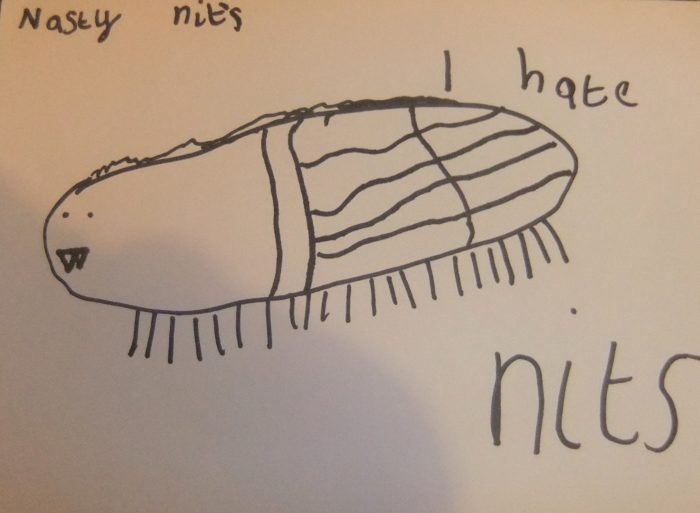 |
| Don't look up nits on Google, they will haunt your dreams. |
But the real reason I'm posting is that I have decided to watch The Last Airbender, yeah the one we mentioned earlier, the one that has a 7% on Rotten Tomatoes.
Here's some fan reactions when it first came out. (the only thing edited in this clip is the poster, and the 3 hours later tag.)
Here's so real fans reactions. Also you can see Boog's review of it here.
Why am I going to watch this? Because I've recently had bad movies on my mind. Mostly in the thought of at what point does a movie become so bad that we have to relegate it to the wall of shame? Once it's past a certain point of crap (measured in the empirical standard as a unit of Keanu) we should be allowed to download the movie for free. Mostly because the movie industry thinks that piracy is bad but lazy movies are okay.


And yes this standard would be mostly for the Hollywood mainstream movies, just because it shouldn't be possible to create the level of crap they do each year with the amount of money they waste on stupid movies.
Luckily I found The Last Airbender at my local library. I'm hesitant to even pay a dollar to Redbox for this thing. Although I am kind of upset that my tax dollars bought a copy for the local library.
So sorry there's no sports articles this week, but there will be Champions Leauge and Europa League games this Tuesday, Wednesday and Thursday, so have fun with those, and I'll probably have something to post in the middle of the week.
And stay tuned for some new sections soon.
08 February 2011
Ginger, on the martial arts behind Waterbending
So this week it's installment 2 in my Avatar: The Last Airbender mini series. I have found I have a somewhat obsessive personality when it comes to new, exciting things. I think that probably gets a little old for my friends and husband, though they would never say so, sweet people that they are. What I'm referring to is my mini (ok not really mini) obsession with the Avatar TV show recently. Everything about it is fantastic: the character development is really strong, the writing is realistic and funny, the setting is actually somewhat believable. Sorry, I'm getting carried away again. Anyways, what impressed me most about the series is the realistic look of the marital arts, and that they were all distinctly different - even in cartoon form. After looking into it a bit more, I found that the creators ( Michael Dante DiMartino and Bryan Koniezko) brought in a martial arts instructor (Sifu Kisu) to help them develop the four different bending styles - talk about commitment! After that I wanted to know more about the martial arts the bending forms were based off of and I thought maybe you guys would be interested to. So I came up with this four part mini series were I would share my findings. Check out Part 1: The martial arts behind Airbending if you missed it.
Waterbending is the first bending form you're exposed to in the series, though the character Katara. She acts as the narrator/secondary main character, and as the series progresses you get to watch her develop her skills and grow into a strong, capable young woman. (Quite fantastic if you ask me.) Anyways, Waterbending is based off the Chinese martial art Tai Chi. There are 5 major styles, each named after the family it originated from: (in order of verifiable age)
The study of Tai Chi itself primarily involves three aspects:
The philosophy behind Tai Chi is that if one uses hardness to resist violent force, then both sides are certain to be injured - at least to some degree. Such injury - in theory - is a natural consequence of meeting brute force with brute force. Instead, students are taught not to directly fight or resist an incoming force, but to meet it in softness and follow its motion while remaining in physical contact until the incoming force of attack exhausts itself or can be safely redirected, meeting yang with yin. Done correctly, this yin/yang (or yang/yin?) balance in combat, or even in a broader philosophical sense, is a primary goal of tai chi training. Lao Tzu provided the archetype for this in the Tao Te Ching when he wrote, "The soft and the pliable will defeat the hard and strong."
Tai Chi's martial aspect relies on sensitivity to the opponent's movements and center of gravity dictating appropriate responses. Effectively affecting or "capturing" the opponent's center of gravity immediately upon contact is trained as the primary goal of the martial Tai Chi student. The sensitivity needed to capture the center is acquired over thousands of hours of first yin (slow, repetitive, meditative, low-impact) and then later adding yang ("realistic," active, fast, high-impact) martial training through forms, pushing hands, and sparring. Tai Chi trains in three basic ranges: close, medium and long, and then everything in between. Pushes and open-hand strikes are more common than punches, and kicks are usually to the legs and lower torso, never higher than the hip, depending on style. The fingers, fists, palms, sides of the hands, wrists, forearms, elbows, shoulders, back, hips, knees, and feet are commonly used to strike, with strikes to the eyes, throat, heart, groin, and other acupressure points trained by advanced students. Joint traps, locks, and breaks are also used. Most Tai Chi teachers expect their students to thoroughly learn defensive or neutralizing skills first, and then demonstrate proficiency with them before offensive skills will be extensively trained. There is also an emphasis in the traditional schools in which one is expected to show wu te (martial virtue or heroism) to protect the defenseless, and show mercy to one's opponents.
In addition to the physical form, martial Tai Chi schools also focus on how the energy of a strike affects the other person. A palm strike that looks to have the same movement may be performed in such a way that it has a completely different effect on the target's body. A palm strike that could simply push the opponent backward, could instead be focused in such a way as to lift the opponent vertically off the ground, breaking his/her center of gravity; or it could terminate the force of the strike within the other person's body with the intent of causing internal damage. Other training exercises include:
(Spoilers?) Surprisingly, I think the series showcased water's ability to adapt and strengthen (like how water forms a canyon over time), especially as Katara's character evolves. Tai Chi was an ideal form for Katara because of it's soft, flowing nature - She's every strong, but in a flexible, quiet way. (Still waters run deep anyone?) Also, as she learns to master her bending, Katara is the epitome of martial virtue: "I will never turn my back on people who need me." (Season 3, episode 3) And again in episode 16 (season 3 again) Katara shows wisdom and mercy someone three times her age would struggle with. That I think, more than anything, is the reason Tai Chi is a perfect fit.
What Sifu Kisu has to say about it:
Check us out next week for part 3: the martial arts behind Earthbending!
 |
| Waterbender Katara (check out the artist's page here!) |
- Chen-style (Chen Wangting, 1580-1660)
- Yang-style (Yang Lu-ch'an, 1799-1872)
- Wu/Hao-style (Wu Yu-hsiang, 1812-1880)
- Wu-style (Wu Ch'uan-yu, 1834-1902)
- Sun-style (Sun Lu-t'ang, 1861-1932)
The study of Tai Chi itself primarily involves three aspects:
- Health: An unhealthy or otherwise uncomfortable person may find it difficult to meditate to a state of calmness or to use Tai Chi as a martial art. Tai Chi's health training, therefore, concentrates on relieving the physical effects of stress on the body and mind. For those focused on Tai Chi's martial application, good physical fitness is an important step towards effective self-defense.
- Meditation: The focus and calmness cultivated by the meditative aspect of tai chi is seen as necessary in maintaining optimum health (in the sense of relieving stress and maintaining homeostasis) and in application of the form as a soft style martial art.
- Martial art: The ability to use Tai Chi as a form of self-defense in combat is the test of a student's understanding of the art. Tai Chi is the study of appropriate change in response to outside forces, the study of yielding and "sticking" to an incoming attack rather than attempting to meet it with opposing force. The use of Tai Chi as a martial art is quite challenging and requires a great deal of training.
The philosophy behind Tai Chi is that if one uses hardness to resist violent force, then both sides are certain to be injured - at least to some degree. Such injury - in theory - is a natural consequence of meeting brute force with brute force. Instead, students are taught not to directly fight or resist an incoming force, but to meet it in softness and follow its motion while remaining in physical contact until the incoming force of attack exhausts itself or can be safely redirected, meeting yang with yin. Done correctly, this yin/yang (or yang/yin?) balance in combat, or even in a broader philosophical sense, is a primary goal of tai chi training. Lao Tzu provided the archetype for this in the Tao Te Ching when he wrote, "The soft and the pliable will defeat the hard and strong."
 |
| Katara's brother Sokka (same awesome artist as above) |
In addition to the physical form, martial Tai Chi schools also focus on how the energy of a strike affects the other person. A palm strike that looks to have the same movement may be performed in such a way that it has a completely different effect on the target's body. A palm strike that could simply push the opponent backward, could instead be focused in such a way as to lift the opponent vertically off the ground, breaking his/her center of gravity; or it could terminate the force of the strike within the other person's body with the intent of causing internal damage. Other training exercises include:
- Weapons training and fencing applications employing the straight sword (known as the jian or chien or gim), a heavier curved sabre (which translates into broadsword, though it is actually considered a big knife), folding fan (called san), wooden staff (2m. in length, known as kun), 7 foot spear and 13 foot lance (both called qiang). More exotic weapons still used by some traditional styles are the large Dadao or Ta Tao and Pudao or P'u Tao sabres, halberd, cane, rope-dart, three sectional staff, Wind and fire wheels, lasso, whip, chain whip and steel whip.
- Two-person tournament sparring (as part of push hands competitions)
- Breathing exercises; nei kung or, more commonly, ch'i kung to develop ch'i or "breath energy" in coordination with physical movement and post standing or combinations of the two. These were formerly taught only to disciples as a separate, complementary training system. In the last 60 years they have become better known to the general public.
 |
| Katara (season three) |
What Sifu Kisu has to say about it:
Check us out next week for part 3: the martial arts behind Earthbending!
01 February 2011
Ginger, on the martial arts behind Airbending
As I mentioned before in my anime post, I've really gotten into Avatar: The Last Airbender recently - my husband and I kinda binged watched the whole 3 book series over the past few weeks. Eventually I hope to post either a video or maybe a text based review/discussion on the whole series, but we'll see how that works out. O.o
Anyways, don't worry - there's no spoilers in this! Some of my friends haven't finished the series yet, and I would get a pounding for giving anything away. This post (first in a series of 4) is about the martial arts that were used to create the different bending forms in the series. I was so impressed with the 'real-life' look of the animated martial arts when I started watching - it's actually the first thing about this show that drew me in. You can actually watch the characters struggle with learning new techniques just like you would with actual martial arts students. It's simply amazing. How can a cartoon be so realistic? The creators of Avatar, Michael Dante DiMartino and Bryan Koniezko, actually brought in a martial arts specialist, Sifu Kisu, to help create the different forms of bending to make them look as accurate as possible, while at the same time making them distinctly different.
We'll talk about Airbending first, since Aang's the last one and all. Airbending is based on the Chinese martial art Ba Gua (offically known as Baguazhang). This martial art attrubes it's creation to Dong Haichuan, who learned from Taoist (and possibly Buddhist) masters in the mountains of rural China during the early 19th century. There is evidence to suggest Haichuan created Ba Gua by synthesizing several pre-existing martial arts taught and practiced in the region he was originally from with the Taoist practice of circle walking. Circle walking is Ba Gua's characteristic method of stance and movement training. All forms of Ba Gua utilize circle walking as an integral part of training: Practitioners walk around the edge of a circle in various low stances, facing the center, periodically changing direction as they execute forms. For a beginner the circle is roughly 6 to 12 feet across. Students first learn flexability and proper body alignment though the basic exercies, then move on to more complex forms and internal power mechanics. Many distinctive styles of weapons are contained within Ba Gua as well; some use concealment, like the "scholar's pen" or a pair of knives (the most elaborate, which are unique to the style, are the crescent-shaped deer horn knives). Ba Gua is also known for practicing with extremely large weapons, such as the bāguà jian (Ba Gua sword), and the bāguà dāo (Ba Gua broadsword). Other, more conventional weapons are also used, such as the staff (gun), spear (qiang), crutch (guai), hook sword (gou) and the straight, double-edged sword (jian). Ba Gua practitioners are also known for being able to use anything as a weapon using the principles of their art. Ba Gua contains an extremely wide variety of techniques as well as weapons, including various strikes (with palm, fist, elbow, fingers, etc), kicks, joint locks, throws, and distinctively evasive circular footwork. As such, Ba Gua is considered neither a purely striking nor a purely grappling martial art. Ba Gua practitioners are known for their ability to "flow" in and out of the way of objects, making ideal for defense against multiple attackers. Ba Gua's evasive nature is also shown by the practice of moving behind an attacker, so that the opponent cannot harm the practitioner.
Ba Gua is an ideal martial art for Airbending: it's movements employ the whole body with smooth coiling and uncoiling actions, not unlike cool and warm air currents. Dynamic footwork keeps the practitioner in constant motion, like air itself. The circular stepping pattern also builds up centripetal force, allowing the practitioner to maneuver quickly around an opponent - perfect for a slighter, more agile fighter.
What Sifu Kisu has to say about it:
Look for installment 2 next week: The martial arts behind Waterbending
Anyways, don't worry - there's no spoilers in this! Some of my friends haven't finished the series yet, and I would get a pounding for giving anything away. This post (first in a series of 4) is about the martial arts that were used to create the different bending forms in the series. I was so impressed with the 'real-life' look of the animated martial arts when I started watching - it's actually the first thing about this show that drew me in. You can actually watch the characters struggle with learning new techniques just like you would with actual martial arts students. It's simply amazing. How can a cartoon be so realistic? The creators of Avatar, Michael Dante DiMartino and Bryan Koniezko, actually brought in a martial arts specialist, Sifu Kisu, to help create the different forms of bending to make them look as accurate as possible, while at the same time making them distinctly different.
 |
| Airbender Aang (Go fan art!) |
Ba Gua is an ideal martial art for Airbending: it's movements employ the whole body with smooth coiling and uncoiling actions, not unlike cool and warm air currents. Dynamic footwork keeps the practitioner in constant motion, like air itself. The circular stepping pattern also builds up centripetal force, allowing the practitioner to maneuver quickly around an opponent - perfect for a slighter, more agile fighter.
What Sifu Kisu has to say about it:
Look for installment 2 next week: The martial arts behind Waterbending
Subscribe to:
Posts (Atom)