Showing posts with label Forgotten Worlds. Show all posts

31 August 2011

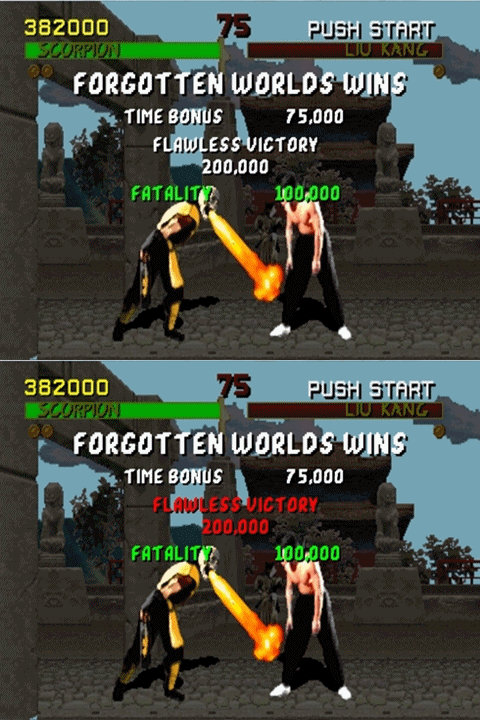
Forgotten Worlds - Mortal Kombat Arcade Kollection


I may be a bit late on this tidbit, but I recently found a website from Namco Bandai that allows you to play the world's biggest game of Pac-Man.  Basically, it's a version of Pac-Man that is swelling with user created levels and continues to grow.  You can even create your own personalized levels and add to the collection.  I created a level based on another Namco classic celebrating its 30th anniversary (as if you need to guess).  Start out with my custom level here, then create and explore this enormous Pac-Man game to your heart's content.

Fans of Ms. Splosion Man who have Pinball FX2, exclusively for XBOX 360, should check out the new pinball table based on Twisted Pixel's explosive valley girl.  Download the trial version for free (Pinball FX2 is also free to download, if you don't have it, yet) and play it for yourself.

Also available, this week, is a collection of one of the most controversial arcade franchises in history.  Mortal Kombat has been showering gamers with blood and gore since 1992 (which means it's one year short of its 20th anniversary).  Since then, the series has had its ups and downs.  Sure, there have been some decent games after the first three, but they couldn't recapture the awesomeness of the original games.  They tried adding weapons, multiple fighting styles, crossovers with comic book superheroes (which was a stupid idea), and even offshoot games (which was even worse).  Nothing could completely win over gamers quite like the original trilogy.

When Midway went out of business, Mortal Kombat seemed to die with it, until Warner Bros. picked up the intellectual property and Ed Boon worked on resuscitating the franchise with a more back-to-basics approach that returned, somewhat, to the original style of gameplay, but pushed the envelope on the characteristic gore and brutality that made the series extremely popular back in the day.

This week, NetherRealm studios (the team that was reborn from the ashes of Midway Games) released a downloadable collection of the first three Mortal Kombat games: Mortal Kombat Arcade Kollection.  Sure, all three of these games have been available in previous arcade classic collections, but this one adds loads more extras, such as new visual modes (including one that makes it look like you're playing the game on a curved CRT monitor, giving you the feeling of being back in the old arcades.  On top of the cosmetic extras, you can play against people online, which seems to be a must for fighting games, these days.

I played the demo of this collection and it brought back memories, for me.  Back in those days, Mortal Kombat introduced a different style of fighting game.  Most fighting games used to be clones of Street Fighter II, which dominated arcades the year before.  Mortal Kombat was different in many ways.  Aside from the obvious, the game used a different control scheme; there were high and low attacks for both kicks and punches, plus a block button.   You had to enter a button combination to pull off the famous Fatalities.  There were secrets and Easter eggs to uncover during gameplay.  It was an entirely new philosophy on how to create a fighting game.


I remember seeing Mortal Kombat for the first time at the local bowling alley and it blew my mind.  I watched my brother and my friends play it (I actually sucked at Mortal Kombat, since I was more accustomed to Street Fighter II).  The game had this irresistible combination of digitized sprites of real actors, uncensored violence and brutality, and a story and atmosphere that reminded me of Enter the Dragon.

Of course, when the game was announced for home systems, my brother and I had to have it.  Unfortunately, there was a reason why arcades were still doing pretty well during the early '90s: ports of arcade games remained inferior to the originals.  Mortal Kombat was no exception.  We got the Super Nintendo version of the game and were extremely disappointed in the result.  All of the awesome crap was watered down.  They changed the blood to look like sweat (though it looked like the characters were bleeding sand) and the Fatalities were heavily doctored.  Nintendo's censorship in their games ruined what could have been a great port.  Even though Sega had no problem with the blood and gore, the godawful graphics and sound screwed up the Genesis port.  It was best just to stick with the arcade version.


1993 saw the rise of Mortal Kombat II, which improved upon every aspect of the original.  Better graphics and sound, new characters, new moves and Fatalities (including Babalities and Friendships, which made fun of the controversy surrounding the first game).  Gone was the storyline of a Shaolin tournament taken over by a shapeshifting mastermind, which was replaced by a fight against an inter-dimensional warlord and his cadre of fighters, sorcerers, and assassins.  By this point, the story wasn't so convoluted and ridiculous yet, so I actually enjoyed it.  The otherworldly aspects of the setting were kind of cool.  Of course, my brother and I got this on the Super Nintendo, but only because they recanted their stance on censorship.  This port of MK II left all the blood and violence in, much to the delight of many gamers.


Then came Mortal Kombat 3 and Ultimate Mortal Kombat 3 (which became the definitive version), which felt like a step down, in some ways.  A lot of things changed in the two years since MK II.  The game became extremely dependent on doing combos, which kind of distanced me further from the fighting engine.  Even more characters were added to the roster, which tangled the storyline with a bunch of subplots.  The graphics were better than the first two, but the stages and new characters felt uninspired.  I'll admit, it was still enjoyable to watch, but it wasn't as fun as the first two games.

After Mortal Kombat 4, a lot of gamers abandoned the series.  By this point, the story was too involved with too many characters that it was not worth following.  It also didn't help that things were getting stale, gameplay-wise.  I've played some of the console sequels, like Armageddon, but it just wasn't the same.

That's why it's refreshing to have this collection of the first three games available.  While I still suck at them, it does remind me of a young gamer who used to ride his bike down the street to play all the new arcade games.  The hell with Quan Chi and Shinnok, screw the DC crossover, and Bo' Rai Cho can suck it.  Give me the classic MK trilogy any day.

27 July 2011

Forgotten Worlds - Galaga Turns 30 (Part 4)


(This post is going to be video heavy, so I hope you guys watch them.)

Last time, I looked at the sequels to Galaga, which is a sequel to Galaxian.  By that logic, it would make sense that Gaplus and Galaga '88 are sequels to Galaxian, as well.  To some people, they are, but there actually was another arcade game that can be considered a direct sequel: Galaxian 3 (which would mean that Galaga would be "Galaxian 2").  Though there really wasn't much of a story to these games to warrant sequels.  After all, the only plot we get from Galaxian is "We are the Galaxians.  Mission: Destroy aliens."  So it's hard to tell how the games flow into each other.

That changed with Galaxian 3 (which has the subtitle Project Dragoon).  While you could only fill out a few pages with the plot, the game does tell the story of a United Galaxy Space Force gunship known as the Dragoon.  It is called out into space to prevent this race of mechanized aliens from destroying Earth with the planet shattering Cannon Seed.  The game used a combination of a traditional arcade board and laserdisc players, similar to some of the laserdisc games of the 1980s.  The laserdisc players provided the backgrounds while the arcade boards made the on screen enemies and other effects, such as explosions or your targeting reticle.

Instead of piloting the Dragoon, players are gunners that aim the ship's turrets at the alien armada that awaits them.  The interesting thing about this game is that it was made for large groups.  In its initial incarnation, in 1990, Galaxian 3 was actually a theme park attraction that had its own building.  The first one, the GH-28 model, actually seated up to 28 people!  Imagine a 28 player video game that wasn't online.  How insane is that?  Only two GH-28 models were ever made, but Namco also created a GM-16 model, which housed, you guessed it, 16 players at once.  While the GH-28 was used in big conventions, such as Osaka's Expo '90, the GM-16 models were installed in Namco's Wonder Eggs amusement parks.  Both models have a similar design: all the "technical stuff" was at the center of a circular room.  The consoles where the players sat ringed around it with the players facing outward.  The game was projected on the outer wall and divided in half (the screen was broken up by the entrance and exit on opposite ends of the room.

 Here's a diagram of the GH-28 model.

The "pilot" and "co-pilot" are the staff that operate the ride.  I say ride because, at least for the GH-28, the central area was actually a platform that had a hydraulic system.  This allowed the platform to rock back and forth while the game played, giving the feeling of the Dragoon listing as it took damage.  From what I've seen, it doesn't look like the GM-16 had this hydraulic system, so that's one of the few differences.  If you look at this promotional video, you'll see the GH-28 in action (as well as other Namco attractions, such as a ride based on the arcade game Tower of Druaga).


(By the way, if you want to find these theme park versions of Galaxian 3, don't bother.  They were all shut down at the turn of the century.)

After creating these attractions for theme parks, Namco was interested in creating a version of this game for game centers (which is what they call arcades in Japan).  Of course, they would have to scale down the number of people who could play to fit the game in smaller buildings.  Namco worked on designing the arcade version, but, for some reason, scrapped the project.  However, something did come out of that research, but it wasn't Galaxian 3.  Compare these two videos: the first one is footage from the arcade version of Galaxian 3 (you don't have to watch the whole thing -- just skip to the middle of the video).


The second video is footage from another Namco arcade game that came out in 1991: Starblade.


If you notice they look a lot alike, it's because Starblade was the remnants of their project to turn Galaxian 3 into a one player arcade game.  My guess is that they felt that Galaxian 3 needed to be a multiplayer game -- one player wouldn't have the same effect.  So they changed the name and released it into arcades.  I actually remember playing Starblade.  The sit down cockpit with a concave mirror display made it feel like you were surrounded.  I also remember the strobe light right above the player's head.  Each time you got hit, it would flash.  Heaven help you if your ship was about to blow up, because that strobe would go nuts on you.  You know those warnings about how certain video games can induce seizures?  This was definitely one of those games.  Anyway, Starblade gets an honorable mention -- it's not really considered part of the Galaxian series, but it is a distant cousin to Galaxian 3.

After a few more years, Namco finally revealed the fruits of their labors.  In 1994, a six player version of Galaxian 3 arrived in arcades, known as the Theater 6 system.  While it definitely was diminished from the GH-28 and GM-16 models, it was still a behemoth.  The "cockpit" was practically the size of a large bathroom.

I could probably set up a sleeping bag
and, theoretically, live in there.

Six players sit, side-by-side, in front of a huge projection screen.  Other than that, its almost the same thing as the GM-16.  Later on, Namco made another game using the Theater 6 system: Attack of the Zolgear, which was the sequel to Galaxian 3.  Sadly, I've never seen one of these in person.  I have heard that some arcades re-purposed the Theater 6 for other games, but I doubt that I will ever find an original Galaxian 3 in the US.

Both Galaxian 3 and Starblade made their way to the original Playstation in 1996, but only Starblade (renamed Starblade Alpha, with an enhanced graphics version) made its way to the States.  Meanwhile the Playstation version of Galaga 3 (again, not available for US Playstations) only has four player support, but adds a new sequel, The Rising of Gorub.

And so ends my Galaga retrospective -- 30 years of classic gaming and still going strong.  If you ever happen to pass by any of these games in an arcade, bowling alley, or neglected corner of a movie theater, drop a quarter and give them some love.

Until next time, keep your scores high and the Earth free from alien bugs.

(Special thanks to the forums at dragonslairfans.com, especially user DarthNuno, who compiled a lot of information involving Galaxian 3.  Images and videos on this post are courtesy of him.)

20 July 2011

Forgotten Worlds - Galaga Turns 30 (Part 3)


Given the runaway success of Galaga, Namco wanted to see if they could make lightning strike twice.  There have been a few sequels, not to mention remakes and arrange versions, but none of them seemed to capture the gaming public quite like Galaga.  This isn't to say that they aren't enjoyable, so don't discount them so easily.


In 1984, Namco updated the formula started with Galaxian further with Gaplus.  This time, Gaplus added loads more new features than its predecessors: faster action, power-ups, collecting parts to get a 1-up, secret "easter eggs," and the ability to move your ship up and down (instead of just left and right).  One of the power-ups you can get from shooting the "Queen" Gaplus (similar to the "Boss" Galaga) is the capture beam (again, similar to the "Boss" Galaga -- the poor guy).  Getting the capture beam allows you to capture dive-bombing Gaplus and use them for extra firepower.  You would think that this makes the game too easy, but, in later levels, it's really hard to survive without some Gapluses (Gapli?) backing you up.  The "Challenging Stages" have changed, too.  Instead of trying to shoot a bunch of enemies that swoops by, you have to juggle them by continuously shooting them.  Each time you hit one, the game slowly starts to spell out a word.  Complete the word and you get a bonus (all of this should make sense in the video below, even if you don't speak Japanese).


Despite coming from a pedigree of great shooters, Gaplus wasn't a big hit.  It was renamed Galaga 3 because some people thought the game strayed too far from Galaga to be recognized as a sequel.  Even so, the video game crash of 1983 sealed this game's fate.  While this game is not as well recognized as others in the series, you can still find this game, especially if you have a Nintendo Wii.  It can be found on Namco Museum Remix or available for the Virtual Console for $6.

That makes no sense.  Where's Galaga 2?

 Three years later, Namco tried again with Galaga '88 (yes, that means it was released in 1987).  This time, the gameplay didn't stray too far from the original Galaga -- gone were all of the features of Gaplus.  Instead, they significantly improved the graphics and sound.  The only added feature to Galaga '88 was the ability to travel to higher dimensions.  Higher dimensions have different looking enemies with increasing difficulty, but reaching them nets you bonus points.


Even though Galaga '88 was better received than Gaplus, less units of the arcade game were made, so it wasn't as widespread.  There are only two ways to play this game (with the exception of the Galaga 30th Anniversary Collection for the iPhone, which I don't own), on the Namco Museum 50th Anniversary collection for last-gen consoles or on the Wii's Virtual Console.


In 1995, there was a compilation arcade cabinet in Japan that included arrangement versions of Galaga, Xevious, and MappyGalaga Arrangement is of note here because it's the only Galaga game to support two players simultaneously.  Other features, such as faster shooting and new rules for "Boss" Galagas, have been added, too.  This version of Galaga is only available in the US through Namco Museum for last-gen consoles.  I really don't know very much about this version, so I'll let this video speak for itself.


Well, those are the direct sequels to Galaga (not including that mediocre PS1 title, Galaga: Destination Earth -- Namco didn't even make that one).  There are a few more games dealing with Galaxian, though, but we'll save that for next time.

Until then, keep your scores high and the quarters flowing.

15 June 2011

Forgotten Worlds - Galaga Turns 30 (Part 1)


Thirty years ago, arcade history was made.  Namco released one of the most popular video games in the world, Galaga.  Now, Namco has had a storied history of some of the greatest arcade games ever made, including Dig Dug, Pole Position, Tekken, Soul Edge/Soul Calibur, and, of course, Pac-Man, but Galaga is special.  It's one of those few games from the golden age of arcades that just about everyone has played.  Even kids today have played this game.  It begs the question of how a simple shooter from 1981 became such a phenomenon.

The answer is simple: Galaga was friggin' everywhere.  Galaga is one of the most prevalent arcade cabinets (whether by itself, or with Ms. Pac-Man in the 20th Anniversary arcade cabinet, which means Ms. Pac-Man is also 30).  You could find it at thousands of arcades, movie theaters, laundromats, bars, pizza places, etc.  Many major video game systems, from the Atari 7800 to the XBOX 360, have a version of Galaga.  It's even been available on most cell phones (I know I had a copy of the game on an old phone of mine).  On top of that, there have been a couple re-imaginings of the classic game, such as Galaga: Destination Earth on the original Playstation and Galaga Legions (along with the forthcoming DX version) on the XBOX 360.


Okay, perhaps the answer is not as simple as that.  No game would be an established part of the video gaming consciousness if it sucked.  While Galaga was not the first top down shooter, it certainly did revolutionize the genre with action never seen before in an arcade game.  Even when other shooters eventually surpassed it in technological advancement, Galaga remained a steadfast favorite of arcade goers.  Perhaps it was the waves of oncoming enemies, or the classic arcade strategy needed for scoring the most points.  Maybe it's the iconic visuals and sounds.  Personally, I just think it has that "x-factor" -- a combination of challenge and fun that is so hard to attain.  Not even its predecessor, Galaxian, nor its multiple successors could duplicate the phenomenon that was Galaga.

But there's much more about this franchise than Galaga, including many other games.  Games which I will go over in the upcoming weeks.  For now, enjoy this anniversary present: a papercraft of the classic Galaga cabinet, courtesy of WayoftheRodent.com.  Just click on the image below, print it out, and start cutting, folding, and gluing.


Until next time, keep your scores high and don't let your last ship get captured.

13 May 2011

Forgotten Worlds - Dungeons & Dragons

When I was four, my older brother introduced me to something that would leave a huge impression on me.  This was something more impressive than any video game, blockbuster movie, or Saturday morning cartoon because it allowed me to tell my own stories.  Being a highly imaginative kid, I was enamored with such a phenomenon.  It was something that could have become a household name; spawning books, toys, video games, and a TV show; if not for the fact that "some people" thought it was a tool for Satanism (in my opinion, those people were the tools).  That thing was Dungeons & Dragons.

28 years later, I'm still playing tabletop rpgs.  I may have changed sides between companies a couple times, but I still enjoy rolling the dice to see if I'm drunk.  Back in the day, there was a certain mystique to Dungeons & Dragons that drew all those socially awkward dreamers, such as myself, to their friends' basements every week to become something much more fantastic.  Even though I don't play D&D anymore (I don't like 4th Edition) I still pay tribute to the pioneers of fantasy gaming.

In 1989, TSR released their second edition of Advanced Dungeons & Dragons, which resurrected the interest in tabletop rpgs.  It was only a matter of time until someone orchestrated the awesome marriage between D&D and video games.  Capcom did just that -- not once, but twice.  When I first saw the majesty that was Dungeons & Dragons: Tower of Doom in the arcades, my jaw hit the floor.  While fantasy arcade games with rpg elements were nothing new (just look at King of Dragons, Knights of the Round, and Cadash), this brought it to a brand new level.  Never before had someone so perfectly integrated a lot of the classes, rules, and creatures of D&D into a brilliant side-scrolling brawler.  Seriously, this game was the closest one could get to "Nerdvana".  Three years later, they followed up an awesome game with an even better one:  Dungeons & Dragons: Shadow Over Mystara.  While I've never seen the sequel in arcades, I did get the chance to play it at an old friend's house with the Dungeons & Dragons Collection import game for the Sega Saturn.


Of course, the games weren't exactly like playing D&D.  It didn't have a "Roll a d20" button, no saving throws, no THAC0 listings.  Actually, I don't think I would play a game that was that painfully adherent to the rules (and those games were made, just for the PC).  Tower of Doom captured the feel of playing D&D without all the bookkeeping.  The game was what a D&D game should look like: seamless, fast-paced fantasy action.

Both of these games were full to the brim with classic D&D style.  The adventures take place in the classic D&D setting of Mystara, which was, pretty much, your standard fantasy campaign.  You and your friends can go around rescuing villages and defeating vile beasts.  And what would D&D be without the monsters.  Capcom scoured the Monster Manuals to give the players plenty of creatures and enemies to slay.  I couldn't believe how psyched I was to fight the Manticore or the Black Dragon for the first time.  And the Lich?  Holy crap, that was awesome (if you didn't know, liches are my favorite fantasy adversaries).

There were also multiple paths you could take throughout gameplay.  While you still played through the same storyline and ultimately end up at the same destination, your journey was dictated by the choices you made. This allowed players to play different levels over others and added to the replay value. With each choice, you explore different areas, such as a swamp, a mountain pass, or a village under attack.  Each specific level had their own unique boss, so there was always something new and exciting to fight.


Of course, with all these adventures to embark on, treasures to collect, and enemies to slay, the world has to have heroes.  Each of the characters in these games run the gamut of the standard D&D classes, but you won't find any multiclassed characters (sorry, all you Fighter/Mage/Thief fans).  Four classes were available in Tower of Doom, and that number expanded to six in Shadow Over Mystara:

First off, you have the Fighter.  Strong, reliable, good with a sword -- your typical hack 'n' slash type.  Of course, he can't use magic, but there are magic items that allow him to use spells, should he find them.  The Fighter is my usual go-to guy when it comes to fantasy roleplaying, so I typically end up playing him in the game.
While not as good with a sword as the Fighter, the Elf makes up for it with the use of arcane spells.  She is a bit faster than the fighter, but loses some reach with her blade.  This Elf is a dead ringer for Deedlit from Record of Lodoss War, who, in turn, was inspired by a roleplaying group that creator Ryo Mizuno played in.

On the other side of the coin, the Cleric mixes divine magic with mace swinging combat abilities.  His healing spells are invaluable in an arcade game, but he's got a couple of offensive spells in his repertoire, such as the ability to turn undead (into dust, that is).


Rounding out the group from the first game, the Dwarf is another combat focused class.  Like everyone else who isn't the Fighter, his weapon's reach isn't very long, but no one can hit faster than he can with his axe.  He also has a higher resistance to spells than any other character.


The enigmatic Magic-User is one of the new classes featured in Shadow Over Mystara.  He's the weakest character, physically, but his arcane abilities are unmatched.


The other character from Shadow Over Mystara is the swift and sexy Thief.  Though not as strong as the Fighter, she makes up for it with the ability to detect traps, which can save your entire party from some unnecessary damage.


With their fantastic side-scrolling action, four player cooperative ability, and the quests, characters, and monsters straight from the pages of one of the most famous tabletop rpgs, both of these games are high on my list of all-time favorite arcade games.  It's a shame that they have not seen a console release since the days of the Sega Saturn (and that was only in Japan).  These games need to be available for current gen systems.  The XBOX 360 is perfect for four player arcade action (as evidenced by Konami's X-Men).  Someone at Capcom better get to work on that, seriously.

A lot of the images, including the video below, are from this great D&D arcade shrine, which features a lot of great resources.  Check out the link here and take a look.  The guy who made it also has some other great video game shrines you should see.  Just click the link for his homepage at the bottom of the shrine.


Until next time, keep your scores high and the quarters flowing.

04 May 2011

Forgotten Worlds - A New Kind of World Record


For the past few years, many arcade mavens, such as Billy Mitchell, Steve Wiebe, and Hank "Dr. Kong" Chien, have tried to take the top score on many arcade games.  Donkey Kong has been at the center of this competition, but it's only the tip of the iceberg.  Many other games beckon arcade aficionados to break new ground in world records.  One man is forging his own quest for greatness, but he's not going for a high score.  He's in it for the long haul.

Joel West has been playing arcade games and breaking records since the early '80s.  He was one of the gamers featured in LIFE magazine back in 1982 in Ottumwa, Iowa at Twin Galaxies Arcade and is also in the arcade documentary Chasing Ghosts: Beyond the Arcade.  He is the first gamer recognized by Twin Galaxies for holding the high score record to two arcade games at the same time.  He's been in competition for the top score for the arcade game Berzerk, a record he previously held.  This game has been known for having gameplay so frenetic, that two teenagers died from heart attacks after playing this game in the early '80s (no foolin', they died immediately after getting a high score).    While he doesn't hold the high score for Berzerk anymore, Mr. West is going for a different record: the longest single gameplay on one credit.  That means he must keep a single game going, from pressing start to "game over," for days without stopping.  For his shot at the record, he's aiming for 72 hours of straight gameplay.


His game of choice for beating the record is Frenzy, which is the sequel to Berzerk and considered to be tougher than its predecessor.  For those who don't know, in Berzerk and Frenzy, you play this guy with a laser gun.  You have to run through these rooms, shooting human hating robots and running from Evil Otto, this giant, robotic smiley face who comes back, even faster, every time you kill him.  There are certain elements of each game that differentiate between the two, but the gameplay is very similar.

Mr. West's first attempt at breaking this record happened at Big Bang 2010, a video game convention in Ottumwa, Iowa (if you want to know more about the arcade history of Ottumwa or the Big Bang events, check out an old article I wrote here).  He really wanted to break the record there to give the town a bit more press, but the Frenzy arcade machine there froze up only four hours into his attempt.  Undaunted, he recently tried again at New Jersey's Richie Knucklez Arcade during The Kong Off (which I talked about on the last Forgotten Worlds).  Unfortunately, he spent so much time traveling and setting up for the attempt that he didn't get a lot of sleep and tired out before breaking the record.

 Here, we see Billy Mitchell getting Joel West started
on his marathon run during The Kong Off
(photo courtesy of TheKongOff.com)
 
Despite these setbacks, Mr. West remains certain that he can claim a new world record.  He plans on returning to Richie Knucklez to make his third attempt.  So far, no date has been set for the event, but I'm keeping my ear to the ground and will let you know when he goes for the record again.  Until then, I wish Mr. West the best of luck.

If you want to see what Frenzy looks like, check out this video.


And, for no other reason than to make my wife happy, here's some pictures of red pandas.  Gawk at the random cuteness!

Aww...

 ...so charming.

 They just seem so cuddly.

Look, he's winking at you.

 They're even adorable when they're eating.

Okay, that was more cuteness than I could handle.  I hope my wife appreciates this.
I'll see you next week.  And, remember, keep your scores high and the quarters flowing.

23 March 2011

Forgotten Worlds: The Kong Off 2011 and Pinburgh 2011

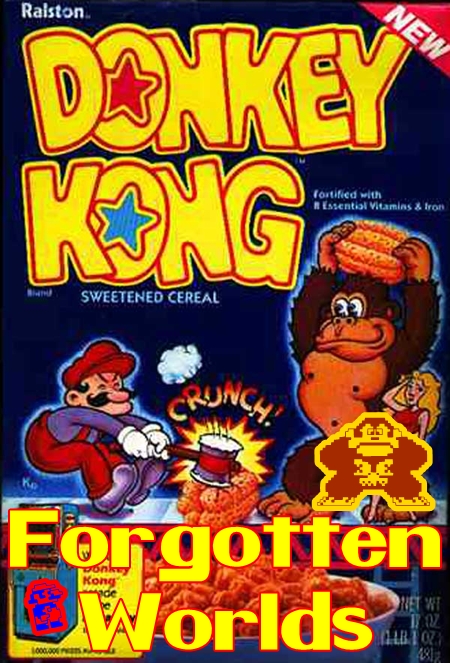
Yes, I used to eat this cereal, as a kid.

Ever since the release of the documentary The King of Kong: Fistful of Quarters, there's been a renewed interest in the competition for the highest score in classic arcade games, especially Donkey Kong.  Such websites as Twin Galaxies, the official archive of video game high scores, remain busy with every new world record that is broken (they also serve as the only resource for high scores for the Guinness Book of World Records).  For the past few years, the competition for the top score in the classic Nintendo game has been characterized by two men: Billy Mitchell, veteran arcade record holder, and Steve Wiebe, who beat Mitchell's record during the filming of The King of Kong.  Two years ago, a new challenger arose and made a name for himself in record time.  Newcomer Dr. Hank Chien came from out of nowhere and claimed the top score in Donkey Kong -- an accomplishment that remains his to this day.

It is this newly revived environment of competition that sets the stage for the first ever Kong Off.  This past weekend, sixteen arcade enthusiasts headed to Richie Knucklez Arcade Games in Flemington, NJ to compete for the top score in Donkey Kong.  Many others attended the event, some to watch and cheer on their favorite players, while others came to break their own records in other arcade classics.  After the smoke cleared, Hank Chien, also known as Dr. Kong, after the new documentary about his quest for the top, came in first place with 994,400 points -- not high enough to beat his world record score, but enough to cement him at the pinnacle, for now.  Steve Wiebe came in a close second place with 986,900 points while another arcade youngblood, Eric Howard, claimed third with 941,800 points.  Billy Mitchell placed in 7th with 821,200 points, but I'm sure that we'll see him push for the top spot again very soon.

Merchandise available for the event included this actual
arcade marquee, which, of course, is already sold out.

Apparently, the Kong Off was a great success.  It's not very often you have the stars of these Donkey Kong documentaries together under one roof to compete, so it must have been a blast (I wish I was there).  Hopefully, this won't be the last Kong Off and we'll see the tournament become an annual event (they may not be able to get Billy, Steve, and Hank to come back every year, but you never know).


But New Jersey wasn't the only place getting some tournament arcade action this weekend.  The Professional Amateur Pinball Association held the Pinburgh 2011 tournament in Pennsylvania, which, from the videos I've seen, was huge.

 Pinball, pterodactyls, and sexy Valkyrie women -- this poster has it all

The tournament was held in a huge facility with a metric buttload of pinball tables -- too many to mention here.  Getting into the tournament cost $100, but I heard that proceeds went to charity.  Hell, if you bought a $10 roll of tokens, $20 went to the Western Pennsylvania Humane Society (which they collected a grand total of $12,550).  Not only that, but each roll of tokens had a special custom made token for the event that you can't find anywhere else.

With all these tournaments and arcade game shows going on in the US, I need to get out of state more often.

Until next time, keep your scores high and the quarters flowing.

26 January 2011

Forgotten Worlds: Androids and Machineguns!


Dude, The Terminator totally got it right: robots will rise up to destroy the human race.  Fortunately, there is something we can do about it.  In the mid-to-late '90s, arcades everywhere armed kids and young adults with hefty, plastic light guns and enlisted them in the fight against robo-terrorism.  I'm talking about Sega's frenzied shooters Gunblade NY and LA Machineguns.

Gunblade NY came out in 1995 and, while it may have been a bit overshadowed by Time Crisis that same year, it was a unique light gun game that attracted many arcade goers.  Of course, there have been a plethora of arcade games that used cabinet mounted machine guns before this: Taito's Operation Wolf series and Space Gun (one of my favorites), Namco's Steel Gunner series (another of my favorites), and Midway's Revolution X and, yes, Terminator 2, to name a few.  However, Gunblade NY did a couple of things differently that set it apart from the others.

First, there's the cabinet design.  If you look at the picture above (which is a pic of LA Machineguns, I know, but Gunblade NY did the same thing), you'll notice those light guns are pretty hefty looking.  Previous machine gun games had you holding this small, one-handed, uzi-type gun or something similar to that.  You had to hunch over the arcade cabinet and hold your face close to the gun in order to play.  But the guns on Gunblade NY and LA Machineguns meant business.  They were designed to be held in both hands, comfortably, at the waist, which felt more natural.  The gun design was awesome, with a nice, weighty feel and a heavy recoil.  These games let you know that you weren't playing with some tiny pea shooter.  You were taking out the androids with a heavy duty cannon.

The other thing these games did differently to their predecessors is their use of polygonal 3D environments.  Previous light gun games relied on simple forward and side-scrolling levels with enemies just popping out into the line of fire.  Gunblade NY took the same technology that fueled 1994's Virtua Cop, along with other titles in the Virtua series, and created something that had much more dynamic action.  Enemies would actually dodge and weave through gunfire, requiring players to keep a bead on them in order to take them down.  Your vehicle, either Gunblade NY's attack helicopter or LA Machineguns' hoverbikes, took tight corners, made strafing runs, and stopped on a dime as they flew over, under, and through each city.


Of course, these games have their slight differences, being that Gunblade NY was released in '95 and LA Machineguns in '98, but they're mostly cosmetic.  The gap in graphics between these two is about the same as the gap between Virtua Fighter 2 and Virtua Fighter 3 (if you've ever seen those games).  LA Machineguns looks nicer than Gunblade NY, but both of them definitely look dated, by today's standards.  This isn't to say that they look horrible.  Both of them look significantly better than the original Virtua Fighter, which may be one of the ugliest arcade games of the '90s.  The only other difference is how the enemies act.  In Gunblade NY, androids do lots of crazy acrobatics, trying to dodge your gunfire.  In LA Machineguns, they don't flip out of the way as much, which makes it a little easier to hit them.  Both games are very short and have been known for being a bit too easy.  Still, dropping a couple quarters to wield a metal blasting cannon never gets old.
Last year, Sega released both of these games in a collection for the Wii.  Of course, the question is whether or not these games still hold up without the feel of a big honking gun in your hands.  Actually, the answer is yes.  While the Wiimote is no substitute for the arcade feel, the gameplay is still just as fun.  The collection doesn't add much extra stuff to the games, with the exception of alternate fire modes, like rapid fire, after you beat the game a couple times.  Other than that, it's a pretty straightforward port of these two arcade games.  You can pick up the collection for real cheap (usually around $20, but my wife found a copy for me at Costco for $10).  If you have a Wii and fondly remember shooting up android terrorists, you won't regret getting this collection.

Until next time, keep your scores high and your pockets full.

(The YouTube video above was created by lucisac).

12 January 2011

Forgotten Worlds: X-Men


During the comic book boom of the early 1990s, Marvel Comics made changes that would give the company an extreme amount of exposure.  If there were any Marvel franchise that spearheaded this new direction the company took, it would be X-Men.  In the 1970s and 1980s, comic book legends such as John Byrne and Chris Claremont, brought deep, rich characterizations and dark, hard-hitting stories, such as “Days of Future Past” and “God Loves, Man Kills,” to titles such as Uncanny X-Men and The New Mutants.  In 1991, the franchise was revamped to become more marketable and attract more potential readers, and it worked.  According to Guinness, X-Men #1 is still the best selling comic book of all time.  The new comic spawned a toy line, video games, and an animated series (I’ll cover most of these at a later time).

Of course, this success wouldn’t last for long. Chris Claremont ended his 17 year tenure of writing classic stories for the franchise after extended clashes with the editor.  X-Men #3 was his last issue (he wouldn’t return to the franchise until 2000).  Follow that up with the 1992 departure of Jim Lee, whose artwork was the foundation of the X-Men’s new popularity, and you have a title with stories and art that was, well… let’s just say they were mostly forgettable.  In the mid-nineties, no amount of holofoil gatefold covers could save the X-Titles.

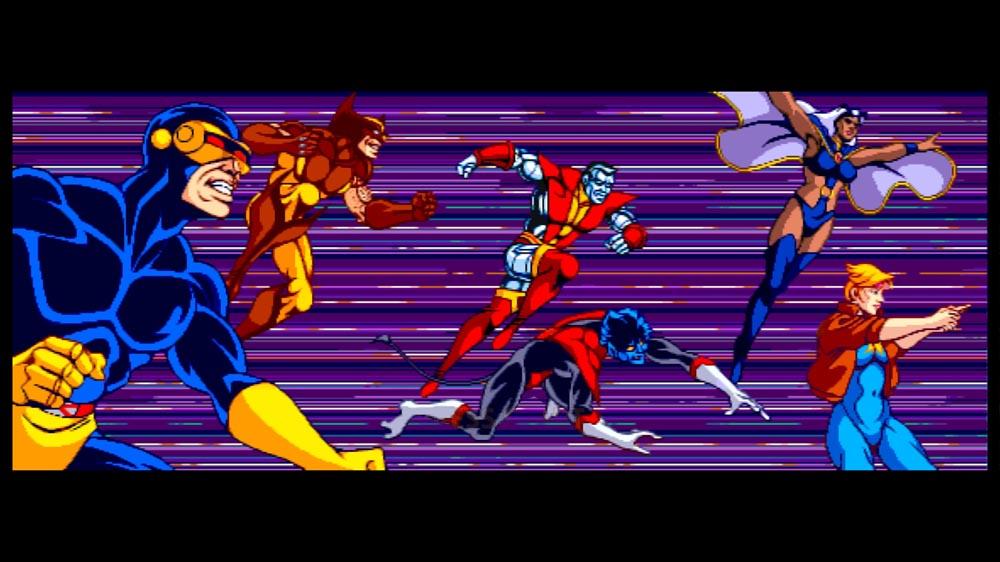
But that’s not what I want to talk about.  This is Forgotten Worlds, after all.  I’m here to talk about arcade games.  While just about every post-’91 X-Men product was based on the teams’ new design, including a handful of arcade fighting games, the original X-Men arcade game was based on something completely different: the pilot episode of an animated series.  This isn’t the same as the successful animated series that came out in 1992.  “Pryde of the X-Men” was created by Toei Animation in 1989 and featured a cast of characters that were prominent in the comic during the ‘70s and ‘80s.  It was intended to launch a series that never got made, as it was panned by X-Men fans as being too campy.  For some reason, Konami took what was considered a flop and turned it into something enjoyable.


Known for creating side-scrolling beat ‘em ups based on popular franchises, such as The Simpsons, and, of course, Teenage Mutant Ninja Turtles, Konami’s X-Men follows in the same vein.  You can usually recognize a Konami beat ‘em up by the vivid colors and cartoony graphics, which worked well with the franchises they used – and X-Men is no exception.  The graphics do a really good job of emulating the visuals of the animated pilot and the similarities with the show don’t end there.   

The game completely evokes the cheesiness of “Pryde of the X-Men.”  The rogues’ gallery in this game is kind of mixed up.  Probably, the strangest is the inclusion of human-sized Sentinels, which were originally designed to hunt and destroy all mutants, as Magneto’s shock troops.  While some bosses were part of the Brotherhood of Evil Mutants, such as Blob and Pyro, other characters were added, like the White Queen, who was featured in the pilot episode and Wendigo who wasn’t.  Just about every one of those bosses in the game spouts some goofy one-liners (my favorite: “Pyro will turn you to toast!”).  These aren’t, necessarily, bad things, as nothing ever gets gratingly annoying.  Sure, the game is not accurate to X-Men cannon, but the game doesn’t take itself too seriously, so why should you?

"...while I get to second base with Daphne in the Mystery Machine."
Yes, I know it's Kitty Pryde, not Daphne. 

If you’ve ever played any of Konami’s beat ‘em ups, you know what to expect, here.  The only new feature that the game introduces is special attacks (each character’s mutant powers) that can deplete your health each time you use them.  While this game doesn’t completely reinvent the genre, it does present it in an extremely fun way.  When this game came out, my younger brother and I would walk to the local bowling alley and drop countless quarters into this six-player beast of an arcade game for an entire summer.  We thought this game was awesome and we couldn’t get enough of it.  Though I felt the same way about TMNT, I enjoyed X-Men even more.

I always thought that Dazzler, the woman with short hair,
looked sexy in that costume. 

If you want to rekindle your love for mutant superheroes, or you’ve never played the game before, X-Men is now available on XBOX Live and the Playstation Network for $10, which is good.  The re-release includes the Japanese version of the game, which added power-ups, and also features online co-op, for those times when you want to play with five other people (which didn’t happen often in the arcades, if I remember correctly).  This game gets the Anacronus seal of approval; definitely, check it out.

Until next time, keep your scores high and your pockets full.

This video is a demo from the 4-player version and is from YouTube user Narox.